Great news, readers! For a multitude of reasons, I've decided to move away from Blogger and back to my own hosting. You can find Mix Tapes & Scribbles, complete and hardly worse for wear, by clicking here. If you subscribe via RSS, click here to update your reader.
Also, keeping www.jaclynpaul.com in your favorites will ensure that you can forever disregard messages like this, because no matter where the blog lives, the address to get there is always the same. Isn't that nice?
Please update your favorite, RSS reader, homepage (loyal fans only!), and most importantly, drop by and let me know what you think!
Tuesday, January 11, 2011

Thursday, January 6, 2011
Setting Creative Goals that Work
A lot of creative people struggle with disorganization. Not everyone fits the stereotype, but many of us admire messy artists—an abstract and freeform lifestyle can imply inspiration, heightened creativity, and a liberated or enigmatic personality. More often than not, the reality of this romanticized stereotype of the scatterbrained artist is far from a carefree, bohemian existence. Just like everyone else, we need to set goals to be successful.
Try as I might to moderate the impulse, I'm addicted to goals. I always have something in mind, I'm always on a quest for self-improvement, and I'm always asking what more I could be doing.
I'm also always falling short. Life never goes as planned, and a combination of perfectionism, high ambitions, and ADD can lead to some big disappointments. It's as important to look at how we set goals as it is to consider what those goals might be.
As a compulsive planner, I tend to forget that ultimate, satisfying success isn't planned. It comes from staying ready to embrace opportunity, both by having an open mind and by knowing yourself well—knowing your values, your style, and who you want to see looking back at you in the mirror every morning.

Of course, we all need something to help us stay fulfilled while we're waiting for opportunity to drop by our living rooms (or wherever you like to wait for opportunity). That's where effective, healthy goal-setting comes in.
I'm currently working on a solid list of creative goals for 2011. However, poor goal-setting can lead to failure and—even worse—low self-esteem. Here are some things to keep in mind when making those oft-intimidating New Year's resolutions:
Try as I might to moderate the impulse, I'm addicted to goals. I always have something in mind, I'm always on a quest for self-improvement, and I'm always asking what more I could be doing.
I'm also always falling short. Life never goes as planned, and a combination of perfectionism, high ambitions, and ADD can lead to some big disappointments. It's as important to look at how we set goals as it is to consider what those goals might be.
As a compulsive planner, I tend to forget that ultimate, satisfying success isn't planned. It comes from staying ready to embrace opportunity, both by having an open mind and by knowing yourself well—knowing your values, your style, and who you want to see looking back at you in the mirror every morning.

Of course, we all need something to help us stay fulfilled while we're waiting for opportunity to drop by our living rooms (or wherever you like to wait for opportunity). That's where effective, healthy goal-setting comes in.
I'm currently working on a solid list of creative goals for 2011. However, poor goal-setting can lead to failure and—even worse—low self-esteem. Here are some things to keep in mind when making those oft-intimidating New Year's resolutions:
- Think about your values and choose goals that inspire you. Sometimes, we're really good at something that doesn't have an important place in our value system. Or maybe we just think we should want to get a promotion, find a better-paying job, or write for 20 minutes every single day. When do you feel most rewarded for your work, most happy and fulfilled? For example, I love music, but making it is a collective experience for me. As such, I get little enjoyment from hacking away at a song on the piano alone for hours, but playing or singing with an intimate group of people makes me feel absolutely fantastic. So a good goal would be getting over my fear of singing for friends, not learning an intensely challenging piece on my own. As much as you can, set goals that align with your deeper values and make your efforts feel worthwhile. Life isn't all about numbers.
- Don't fight yourself. Instead, get to know yourself. How and when do you work most effectively? When do you perform at your peak? It's tempting to set goals based on the negatives: things we want to change. Instead, think about your strengths and apply them to what you'd like to accomplish. It's a lot easier to push from good to excellent than from bad to mediocre.
- Get excited. If you're not excited for what's in store, how are you going to stay motivated? Make sure you connect with your goals and know where you want to end up as a result of achieving your goal, whether it's fitting into your college clothes, saving money for an amazing trip out West, or applying for that artist-in-residency program you've been daydreaming about.
- Set goals that you can control. I love to write things like "have a solo photo exhibition" or "write a stage play and see it performed" in my list of long term goals. However, the end result is ultimately in someone else's hands, so it's not a good goal. Healthy goals provide a challenge, but leave success up to you and you alone. Writing a stage play, then reaching out to five different theatre companies to see if anyone's interested is far more productive.
- Break it down. If I want to submit to six literary journals this year, that means I need to set weekly and monthly writing and editing goals to support that. If I want to write a stage play, I need to set a goal to read scripts on a regular basis, experience plenty of live performances, research proper formatting, and find a competent and critical friend to read it when I'm done. Setting a big goal without stepping back and addressing the steps to get there will set you up for disappointment.
How about you? What strategies have you used to kick off 2011? How do you set and manage goals, and when do you check in with yourself to assess your progress?

Monday, January 3, 2011
So This is the New Year...
If you haven't noticed, Mix Tapes & Scribbles has taken a holiday break. I had a mind to announce this, but decided I would just make sure I kept posting over the holidays instead. Instead, here's what I've experienced:


- Watching the last Broadway performance of Rent before leaving for Christmas (not even in the same class as the movie version, folks).
- Traveling to PA for a whirlwind four-day weekend of Christmas festivities.
- Singing with my dad, cousin, and the church choir on Christmas Eve and experiencing four-part vocal harmony for the first time.
- Finding out that yes, if pressed, I can still play the piccolo proficiently.
- Getting good at the drums in Rock Band.
- Spending two days trying to fly from Baltimore to Los Angeles, including some really exciting foul-weather landing attempts and an unexpected overnight stay in Houston.
- Finishing my wool wrist warmers and beginning to knit an afghan.
- Taking a lot of photographs and feeling inspired to write.
- Seeing Black Swan at the Arclight Theater in Hollywood..
I'm sure there's more, but during this crazy adventure (which remains ongoing—I'm still in L.A.) I haven't had much blogging time in my days. Not to worry, I'm working on a new piece of writing about it all and once the dust settles, I'll have a lot of fodder for the blog. Until then (i.e. until the weekend), posting will be light.
However, I have another artist feature in the can and I'm going to leave you with a short list of resolutions for 2011. These will return with some friends in an upcoming post about goal setting/management, but for now, I'd like to do the following in 2011:
However, I have another artist feature in the can and I'm going to leave you with a short list of resolutions for 2011. These will return with some friends in an upcoming post about goal setting/management, but for now, I'd like to do the following in 2011:
- Write a script
- Finish my novel
- Be in a flashmob
- Learn a dance
- Submit to six literary publications
- Write and feature more guest posts
What do you have in mind for the new year?
Wednesday, December 22, 2010
WordPress vs. Blogger: Thoughts Anyone?
I'm currently spearheading an exciting project at the office: guiding our organization through a major website redesign. For a well-established, not-exactly-small non-profit with a limited budget, collating and meeting everyone's needs is harder than it looks!



I ended up deciding to use WordPress as a content management system and combine our website and blog into one pretty unit. Hopefully the new site will launch by late February.
It seems like this solution is going to work well for us, and it got me to thinking about Mix Tapes & Scribbles (I consider this sort of learning/experimenting a major perk of my job). I've been waiting for a Blogger iPhone app, but I think I've come to terms with the fact that it's never going to exist. WordPress not only has an app for convenient, manage-and-moderate-anywhere control, it would let me return to self-hosting as opposed to redirecting my domain to Blogger.
Disadvantages include having to maintain my own platform again (I did this before with Movable Type) and being tempted to get overambitious with customizations. Also, Google rules the data mining and indexing world, so having them host the blog does very well for search engine results.

In the end, switching to WordPress could give me a much more attractive, easier to manage home for Mix Tapes & Scribbles, but just like the Mac vs. Windows vs. Linux argument, there are no clear answers.
So I turn to you, Dear Readers, and ask: have you had any experience with Blogger, WordPress, or even switched between the two? Have you used the WordPress app on your iPhone/iPod/iPad? What do you have to share with me?
Sunday, December 19, 2010
Life and Work: Finn Wild
I know I'm a couple days late (sorry!), but it's time for our next artist interview! This time we're checking in with Finn Wild. Finn has spent a lot of time living on the road and/or off the grid, which I think gives her a unique artistic perspective. Like me, she paints, writes, and photographs, choosing a medium to match the inspiration. I'm quite pleased to introduce her to you!
Side note: as many of you know, I'm a professional proofreader and self-proclaimed grammar snob. I have an ongoing feud with my best friend at work because we disagree on serial commas. However, Finn has a particular grammatical-visual writing style that I think is very important, so I've made sure to carefully preserve it here. Enjoy!
How do you describe yourself as an artist?
i'm a writer & a visual artist. i do nature-inspired abstract paintings & drawings. i make zines, i wrote a novel, i take photos. i like being creative in general, in everything i do.
How do you react to the terms "visionary artist" or "folk artist," which are two of the most common descriptors for artists without formal training? Do you like them as identifiers?
i could see how they'd be useful sometimes, but in general i don't like them. as soon as you add more qualifiers you lessen the amount of people you're simply calling an artist. you narrow the definition. & i think anyone can be an artist.

What are your art-making rituals? What keeps you dedicated and in shape?
i'm an incredibly lazy artist. i find it really hard to motivate myself. i go through cycles—sometimes all i do is paint & draw, sometimes all i do is write. i tend to create a lot of work really quickly & then not make anything again for weeks. my lack of output really bothers me, & is one of the reasons i often don't feel like a "real" artist—like one needs all these mountains of things to prove it.
i try to just drop everything when inspiration/motivation hits, & treasure those times.
What are you working on now?
i started a series of paintings & drawings based on the magnified cell structure of different types of wood, & from there began making up my own cell patterns. i'm also very in love with maps & geological layers right now, & have done a few things based on those images. i take photos almost every day. lately they've been of joshua tree national park & the surrounding desert towns 'cause that's where i am. i'm writing mostly for myself right now, working through the events of the last few months, which were really intense for me.
Tell us about your background/education.
i'm self-taught, for the most part. i couldn't afford to go to college after high school, & even now i don't think going to art school would be my first choice. i sometimes feel like i would be a better artist if i had more understanding of technique & mediums, but usually i think i'd rather just make stuff than worry about learning how to do it "correctly" first. i find beauty in what just happens, what naturally comes out of people, their innate creativity & first inspirations.
Where do you get inspiration when things get tough?
for visual art: nature. i take slow walks & look at things closely. then all i want to do is draw. also, looking at other people's work that i like. with writing, it's all about reading a lot.

What does your creative space look like? Where is it? Do you share it?
i've been traveling & living in temporary situations for a while now, so i don't have a dedicated creative space. this definitely hinders my art because ideally i like to have a place where everything can be spread out & always ready.
How has the decision to live on the road affected your art work, in terms of both output and focus/subject matter?
i do less painting when i'm traveling, but i take more photos & have more to write about. i'm very inspired by plants & rocks & natural patterns, & traveling has introduced me to so many different regions with new & exciting vegetation & terrain. you can definitely look through my sketchbook & tell what region of the country i was in at the time.
whenever i'm traveling i feel incredibly inspired to make art, but feel like i don't have the time or space to do it. Then, when i'm still somewhere, i realize that that inspiration was keeping my creative life going, & even though i might have the time & space finally, i feel less motivated.
Despite the relative isolation inherent in your lifestyle, you still emphasize the importance of looking at others' work, reading a lot, etc. I've been told a lot that "you can't create art in a vacuum" and these outside influences are vital to successful art. How do you feel about this?
i'm not sure that you have to be exposed to a lot of art in order to make it, but i find it helpful. i'd also
be really curious to see what art i would make in a vacuum, though. sometimes i wish i knew what i would create without so much influence, & without thinking about the audience or finished product.
What was the darkest time for your work? How’d you get out of it?
the first couple years after high school i hardly made any visual art at all. my art teacher was very into having us copy photographs. she only encouraged us/allowed us to make very photorealistic art, which is when i found out i had some talent, & i made some decent things. after school I didn't really have the motivation or desire to sit for long periods of time simply copying an already existing image. i thought i wasn't a creative person & could only copy things, & even being good at that didn't seem very interesting or special to me.
one of my friends always carried around a little sketchbook with her, & i looked through it often. she makes really great abstract art. so then, just because i liked the idea of carrying a sketchbook around with me, i bought one & started doodling in it. it was the first time i liked images i was inventing. so i started making art again, & started loving more abstract stuff, & found my own style.
What are your current goals? Where do you see your work going in the future? Do you think you’ll try to support yourself with your craft at some point, and if so, how?

i want to focus more on painting. i want to try to keep myself motivated—i want to paint a lot, a lot, a lot. enough that i can try to start selling some work. i want to keep making zines. i'm not sure that i could ever support myself entirely with art, but i would like to get my work out there more & at least try selling things.
i also want to start weaving rugs again, which is something i did for years when i was younger, & hopefully sell them. & take more film pictures.
i thought this answer would be more focused—just paint!—but i'm not a very focused person. i want to keep making all kinds of art, & crafts, & write. i just want to do more of it, all the time.
Tuesday, December 14, 2010
How Do I Measure a Year?
Just like I promised, I gave my manuscript away to another reader on December 1. The other day this reader said, "I always envy writers because they can invent such engaging scenes, images, and details. How do you come up with all that?"
If friends or lovers were to ask me, "what do you think of when you think of me? What details?" I would come up with rich little vignettes, full of sensory experiences, this time real and not imagined. I remember by scent, touch, the particular slope of the outside corners of eyes. I remember tiny gestures of love long forgotten by anyone but me.
What I remember less are pictures. For example, winter in Pennsylvania is less a memory of pale gold mowed fields against purple December skies. It's the thick quiet-sound of night with nothing but trees surrounding me. It's wood smoke carrying on cold air that crackles in my lungs.
But sometimes we want to show others what we see. Words paint most of my pictures, but photographs can tell a story not so much about what's there in front of eyes and lenses, but what our hearts and minds can see. I hope that any photograph I take of winter in Pennsylvania will say wood smoke, will say night pulling against your eardrums.
Sometimes I talk too much. Photographs provide a place for thoughts to linger, where we don't need to craft layers of explanation.
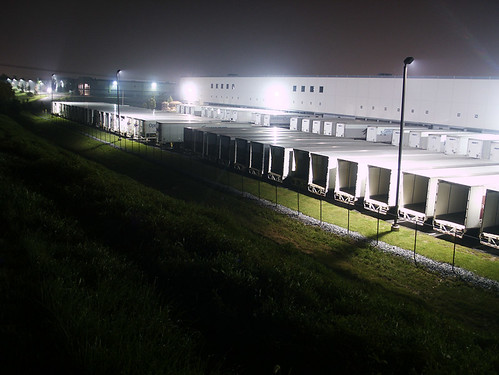
I never felt this about photography more than when I worked on this series of nighttime photos:
Even wandering my own house, absorbing brand-new warmth after days with no heat, I'm still enamored with my ability to see.
What do you remember? Are there sounds in that space? Words? Pictures? What do you remember about a defining moment in a relationship?
If friends or lovers were to ask me, "what do you think of when you think of me? What details?" I would come up with rich little vignettes, full of sensory experiences, this time real and not imagined. I remember by scent, touch, the particular slope of the outside corners of eyes. I remember tiny gestures of love long forgotten by anyone but me.
What I remember less are pictures. For example, winter in Pennsylvania is less a memory of pale gold mowed fields against purple December skies. It's the thick quiet-sound of night with nothing but trees surrounding me. It's wood smoke carrying on cold air that crackles in my lungs.
But sometimes we want to show others what we see. Words paint most of my pictures, but photographs can tell a story not so much about what's there in front of eyes and lenses, but what our hearts and minds can see. I hope that any photograph I take of winter in Pennsylvania will say wood smoke, will say night pulling against your eardrums.
Sometimes I talk too much. Photographs provide a place for thoughts to linger, where we don't need to craft layers of explanation.
I never felt this about photography more than when I worked on this series of nighttime photos:
Even wandering my own house, absorbing brand-new warmth after days with no heat, I'm still enamored with my ability to see.
 |
| Naturally, completely unembellished, this is how I see. |
 |
| I know it should look this way, but I'll always know the flattened and semi-mysterious,hazy-shape-and-color truth. |
 |
| These are the dust and shadows I study when I'm trying to find my next sentence. |
Wednesday, December 8, 2010
Disaster Station
Some weeks are great for goal-setting, relaxing, or doing lots of things you intended to do.
Other weeks are none of the above.
Sometimes, your longest and most tiring days are bunched up at the beginning of the week, you don't go to bed at a reasonable hour, and you're positively bombarded with every crisis imaginable at work. Then, on top of that, the new World of Warcraft expansion is released the same week as your class ends, so you can't play with your friends because you have a ton of writing to do. Oh, and to top it all off, your furnace dies, saddling you with a huge unexpected cost and a heat-free house when it's windy and below freezing outside.
What, that's not how your week happened? Oh, I must be talking about mine!
Though this hasn't been the greatest week for pondering creative goals, learning a new song on the piano, or getting out my paintbrushes again, it hasn't been without its victories. In fact, I'm exhibiting a hitherto-unforeseen ability to see the light at the end of the tunnel: things won't be crazy forever. They'll be crazy until Sunday night. And on Monday, I can start anew, sans class and sans this week.
After my major project success on Saturday, I was interested to see what would happen when I went to work on Monday morning. As luck would have it, no obvious miracles happened. Life was far more hectic than I expected, and I certainly didn't demolish my entire outstanding task list. However, I managed not to fall behind or panic about how I would get things done. My email inbox stayed under control, I communicated with everyone promptly, and I think I had a far better attitude than I may have expected under the circumstances. So yay for that!
In other news, winter always inspires knitting projects. This time, I decided to take a stab at making my own wrist warmer pattern, making me a bona fide knitted garment designer! I've never been good at lighting stuff to show cable stitching, but here's what I've got so far:

In a few days I should be able to show off the final product on my hand, complete with a little sleeve for my thumb (that part was tough to figure out!).
Other weeks are none of the above.
Sometimes, your longest and most tiring days are bunched up at the beginning of the week, you don't go to bed at a reasonable hour, and you're positively bombarded with every crisis imaginable at work. Then, on top of that, the new World of Warcraft expansion is released the same week as your class ends, so you can't play with your friends because you have a ton of writing to do. Oh, and to top it all off, your furnace dies, saddling you with a huge unexpected cost and a heat-free house when it's windy and below freezing outside.
What, that's not how your week happened? Oh, I must be talking about mine!
 |
| The end of an era: after over 40 years in operation, my trusty furnace closes its doors. |
After my major project success on Saturday, I was interested to see what would happen when I went to work on Monday morning. As luck would have it, no obvious miracles happened. Life was far more hectic than I expected, and I certainly didn't demolish my entire outstanding task list. However, I managed not to fall behind or panic about how I would get things done. My email inbox stayed under control, I communicated with everyone promptly, and I think I had a far better attitude than I may have expected under the circumstances. So yay for that!
In other news, winter always inspires knitting projects. This time, I decided to take a stab at making my own wrist warmer pattern, making me a bona fide knitted garment designer! I've never been good at lighting stuff to show cable stitching, but here's what I've got so far:

In a few days I should be able to show off the final product on my hand, complete with a little sleeve for my thumb (that part was tough to figure out!).
Sunday, December 5, 2010
Entering the Matrix
 Nearly four months ago, I moved the furniture around on the second floor of my house to create a bright, orderly, sunny, inviting new office. I'm typing there now, sipping coffee and gazing at the winter morning sun reflecting pale and clean off of telephone wires and buildings.
This was a great move, except for one thing: when I created my office, I left behind another room. A room with too many furniture pieces, a room where we discarded everything we weren't sure what to do with. Every time I entered this room to clean it up, my thoughts seemed to disperse, fleeing in every direction as an overwhelmed feeling washed over me and I shut the door again. I literally pretended this room did not exist in my house for four months.
Yesterday morning I stood in the living room with a pill in my hand. I felt a little like Neo in the Matrix, on the precipice and able to choose between two worlds. I tried to remember what I'd told my rational self: if I had a chemical imbalance anywhere else in my body, I would have no moral objection to medicating it. I had completed a rough draft of a novel, and not finishing it would be devastating. I wasn't getting what I want out of life. Oh and hello, I had been living minus one room in my house for months.
So, with some trepidation over how I would feel, I took it—ritalin.
I make mention of ADD as it relates to work and creativity on this blog fairly often, but I don't get nitty gritty about what my life is like. Honestly, it's a little upsetting. But at some point recently, I realized that being strong-willed and high-functioning might not get me everywhere I want to go. I had long ago accepted that life was just going to be harder for me. I could have some of the same successes others had, maybe even more, but I would have to work far harder. And outside academia, where I had the benefit of not needing to try to succeed, I was losing some key battles. Most importantly, I was tired of existing at a baseline of anxiety and panic mixed with persistent lethargy—it is one of the most uncomfortable feelings I can imagine.
So what happened? Internally, I felt calm and quiet when I needed it, plus an exhausting sense of focus (I say exhausting because I never work on anything continuously for that long, and I was beyond tired by the time I was done). The curtain call finally came for that clamoring need to do 10 things at once, and somehow when I opened the door to that room I felt okay. I understood that some things needed to be thrown away, some taken downstairs to the tool chest, some put in the storage room, and others given away. After a couple hours of work I looked at the floor and was dismayed at how much I still had to do—until I realized I had sorted everything into bags according to where they needed to go in the house.
My husband came in to help me untangle a huge ball of yarn. I watched him work on it until he told me to start winding it into a new ball and realized that usually, watching him work on a task like that would have made me feel like I was about to climb up the walls. I would have gotten impatient, yelled at him for taking too long, tried to rush the process by grabbing at a piece of the yarn, and eventually frustrated him enough that he would walk out of the room, leaving me to work alone. This time we worked as a team. I stayed calm and grounded and in control.
By 2:00, I had earned the prize I'd been waiting for: a trip to Target to shop for an area rug for my new room. Not only that, I had found a significant amount of cash laying around as I was cleaning—enough to cover the cost of the rug, two 16x20 photo frames, and some new Christmas decorations!
Unfortunately, I don't have 'before' photos. I should have taken some, but if you've seen Clean House, you know what a room looks like when the furniture is thrown in every which way and a lot of random possessions are discarded in the space. I couldn't walk across the room without tripping or stepping on something. And by dinnertime, the room looked like this:


However, I've always been hiding something: the incomplete personal projects, the closed-off room in my house, etc. And the worst thing about having ADD as an adult is this: no matter how successful you are where it really counts, you still don't feel like a successful person. You still feel like there's something wrong with you, or like you may never achieve your dreams or be as successful as those around you. It becomes almost impossible to relax because there are always things looming at the edge of your mind, even though you aren't doing a thing about them.
The act of actually finishing a project really gave me a boost in self-confidence. And while there's no magic bullet—medication doesn't make you feel like a regular person, your mind and body are both aware that something external is making you productive—there are tools we can fall back on. In this case, I used a tool that allowed my mind to understand a complex task and take it on. The decision to enter this experiment pitted me against my own stubbornness and willpower, which is why it took me years to get here. I'm sure I'll continue to have thoughts on it (which I will share, of course), but hopefully I'll have more to report than just making my space more inviting: things like completed manuscripts, more days at the piano, a nice little art corner in the basement.
If you've had any similar experiences, I'd love to hear them! I know the issue of medication and attention disorders is a contentious one, especially among adults, but I also know a lot of people close to me have had their own struggles and successes. Feel free to share your story as well!
Wednesday, December 1, 2010
Life and Work: Matt Agnello
It's kind of hard to believe two weeks have gone by already, but here we are again! This dose of life and work comes from friend and fellow artist Matt Agnello.
I can still remember visiting Matt in Boston when we were in college—I spent some time on the floor of his apartment putting together a handmade book of photography, and we accompanied him out on a nighttime shoot for the opening sequence to a Boston University TV show.
Speaking of college, I ask about education in these interviews for a reason: we fine arts folks end up in some interesting places. This really caught my eye in today's interview:
As an aside, you should really check out some of Matt's work on Vimeo. It's three years old, but I've always been partial to this delightful little short film:
The Cranemaker from Matt Agnello on Vimeo.
I can still remember visiting Matt in Boston when we were in college—I spent some time on the floor of his apartment putting together a handmade book of photography, and we accompanied him out on a nighttime shoot for the opening sequence to a Boston University TV show.
Speaking of college, I ask about education in these interviews for a reason: we fine arts folks end up in some interesting places. This really caught my eye in today's interview:
I think more often than not your education is tangential to what you end up doing. For me, that’s certainly true. But the basic concepts I learned about in my film classes can be applied anywhere. You learn about dramatic systems, how people react to stimuli, meaning that’s created visually instead of through prose. All of those translate to any creative or dramatic medium. It’s like learning a programming language. Once you know one, you know them all. You just need to learn a new dialect the next time around.As you know, I don't use my degree directly at my day job, but I sure do feel like it gave me the skills I need to survive. But that's for another day. Coming up soon: contentious life decisions, turning over new leaves, and rediscovering self-awareness. But for now, enjoy a peek into another creative life! (Click the link below the video to continue reading).
As an aside, you should really check out some of Matt's work on Vimeo. It's three years old, but I've always been partial to this delightful little short film:
The Cranemaker from Matt Agnello on Vimeo.
Thursday, November 25, 2010
Productive in All the Wrong Places
Yesterday I resolved to wrap a few things up at work, then head home so I had some extra time to pack for our Thanksgiving travels. While I cleaned up my desk at the office I occasionally stopped to add to my list of things to pack: manuscript, next week's class readings, notebook, camera...
Surely I didn't want to forget anything.
Then I realized, I always pack these things, but I come home disappointed with how little I've gotten done. Holiday travelling is far from a golden opportunity for productivity. It's a time when we do lots of driving, visiting, and more visiting. So this Thanksgiving, I'm packing my manuscript, but I'm just going to concentrate on enjoying the time off as much as I can.
Happy Thanksgiving!
Surely I didn't want to forget anything.
Then I realized, I always pack these things, but I come home disappointed with how little I've gotten done. Holiday travelling is far from a golden opportunity for productivity. It's a time when we do lots of driving, visiting, and more visiting. So this Thanksgiving, I'm packing my manuscript, but I'm just going to concentrate on enjoying the time off as much as I can.
Happy Thanksgiving!
Subscribe to:
Posts (Atom)